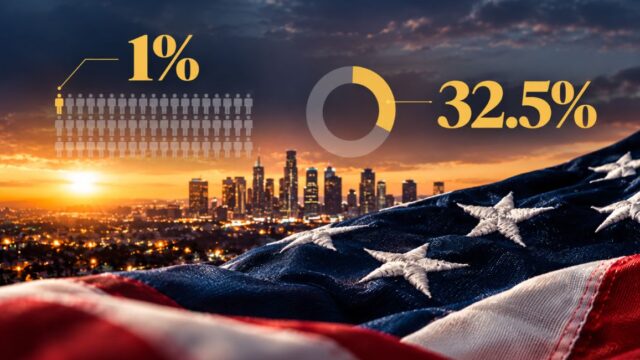


America has never had more ways to become extraordinarily rich.
Technology, artificial intelligence, private equity, finance, retail, and old-fashioned entrepreneurship have created fortunes large enough to make previous generations of billionaires look almost modest.
For women at the very top, though, inheritance still does most of the heavy lifting.
There are 62 women on the 2026 Forbes 400, representing about 16% of America’s 400 richest people. Only 13 are classified by Forbes as self-made.
Put another way, 49 of the 62 fall on the inherited side of Forbes’ wealth scale, just under four in five. Again, those figures come from Forbes’ 2026 ranking data.
The comparison with the rest of the list is more revealing than the 79% figure by itself. Across the entire Forbes 400, 71% of members are self-made. Among women, only about 21% are.
That is a very different picture of how enormous fortunes are being created.
The Forbes 400 Has Never Been More Expensive to Enter
Before looking at where the money came from, it helps to check out how much money we are talking about.
Forbes estimates that the 400 richest Americans are collectively worth $8 trillion in 2026, up from $6.6 trillion a year earlier.
A fortune of at least $4.4 billion is now required simply to get onto the list. Ten years ago, the cutoff was $1.7 billion.
| 2026 Forbes 400 figure | Number |
|---|---|
| Minimum fortune required | $4.4 billion |
| Total wealth of all 400 | $8 trillion |
| Women on the list | 62 |
| Women as share of list | About 16% |
| Self-made women | 13 |
| Women classified on inherited side | 49 |
| Entire list classified self-made | 71% |
That makes the gender split particularly interesting.
Women are not merely underrepresented among wealthy Americans.
They are even more underrepresented among people who created ownership stakes valuable enough to clear a $4.4 billion hurdle.
The 10 Richest Women on the Forbes 400
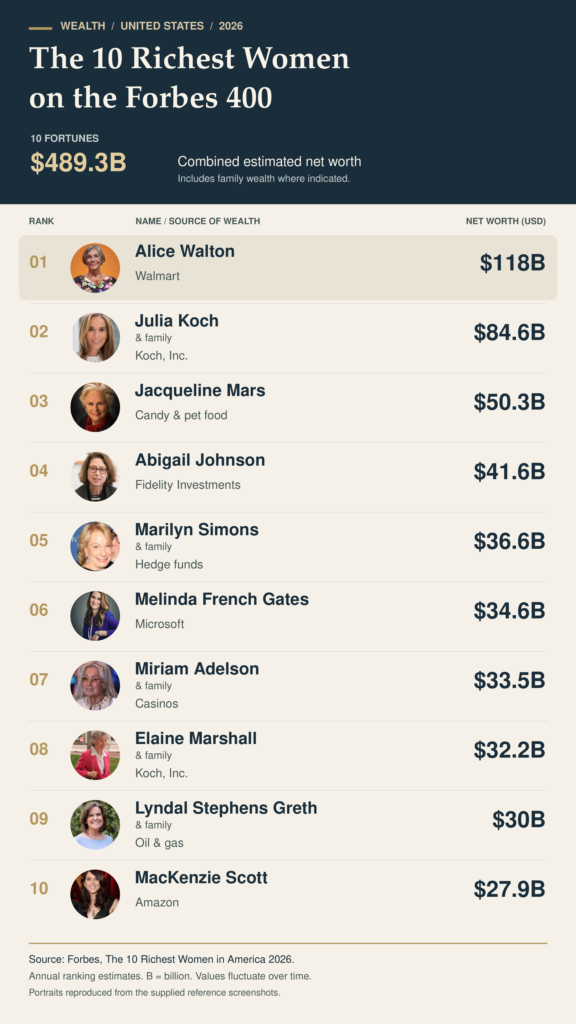
The ten richest women on the 2026 Forbes 400 hold a combined estimated $489.3 billion, with fortunes tied to companies such as Walmart, Koch, Mars, and Fidelity.
Alice Walton Shows the Power of Owning the Right Asset
America’s richest woman is Alice Walton, the daughter of Walmart cofounder Sam Walton.
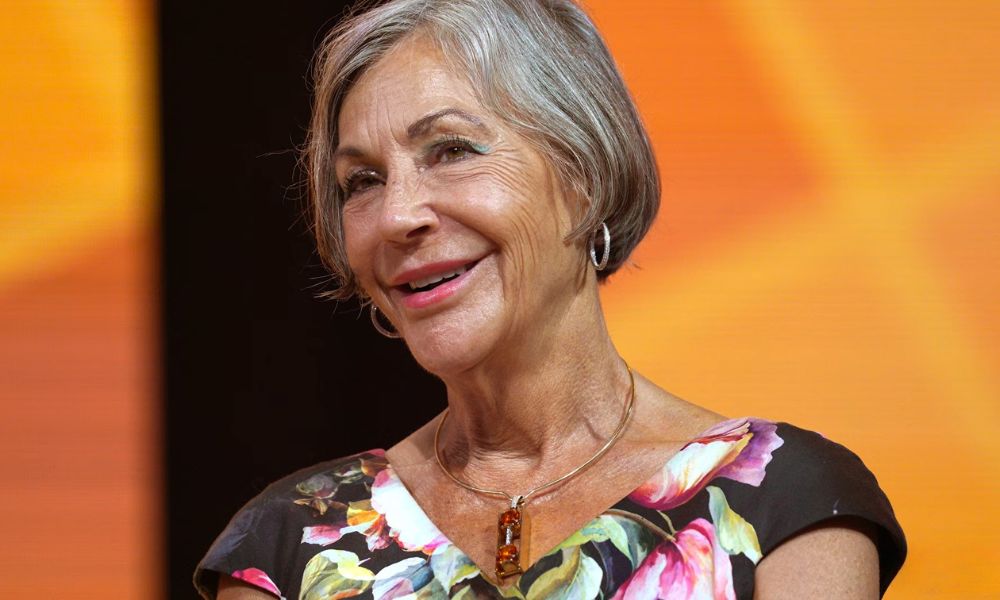
Forbes values her 2026 fortune at about $118 billion. Walmart shares have risen more than 10% since last year’s ranking, helping push her wealth higher without Walton needing to build another Walmart, or anything remotely close to one. That is not criticism. It is simply how ownership works.
A great business can continue creating wealth for its owners decades after its founder is gone. Sam Walton died in 1992. More than three decades later, the company he helped build continues adding billions of dollars to his heirs’ fortunes when its market value rises.
Inheritance discussions become unhelpful and generally pointless when they turn into arguments about whether an heir “deserves” the money.
Finance does not have a deservingness column on the balance sheet. The better question is where the original ownership came from. For Walton, it came from her father.
Julia Koch, America’s second-richest woman, similarly inherited her stake in Koch Inc. after the death of her husband, David Koch. Forbes estimates her family’s fortune at $84.6 billion.
The numbers become enormous because concentrated ownership compounds extremely well.
The Self-Made Side Looks Very Different
Diane Hendricks sits on the other side of the ledger.
Hendricks cofounded building materials distributor ABC Supply and is worth an estimated $23.6 billion, making her the richest self-made woman on the Forbes 400.
Her fortune is huge by any sensible standard. It is still roughly one-fifth the size of Alice Walton’s.
That gap illustrates something that gets lost in discussions about billionaires. Building a multibillion-dollar company is one path to wealth. Inheriting a large stake in a company that has already compounded for decades is another. The second path starts much farther down the field.
The broader ranking of self-made women shows encouraging movement. In 2026, a record 43 self-made women in the U.S. are billionaires, up from 38 a year earlier. Forbes also counts about 700 self-made male billionaires in the United States.
Forty-three against 700 tells me considerably more than another corporate press release about progress in entrepreneurship.
There are clearly more women building giant companies and accumulating substantial ownership stakes. The starting gap, however, remains enormous.
AI Is Beginning to Change the List
One of the most interesting additions in 2026 is Daniela Amodei, cofounder and president of artificial intelligence company Anthropic.
Forbes estimates her fortune at $15.5 billion, making her the second-richest self-made woman in America and one of several AI entrepreneurs newly wealthy enough to join the Forbes 400.
Here is where you should watch the numbers over the next decade.
Technology creates fortunes unusually quickly because founders can retain meaningful equity in businesses that reach valuations of tens or hundreds of billions of dollars. AI is now producing exactly that type of wealth creation.
The interesting question is not whether more female billionaires appear. They almost certainly will.
The question is whether more women appear on lists like the Forbes 400 because they own founder-level stakes in businesses they helped create.
That would change the composition of wealth, not merely the gender of the person holding it.
Inheritance Does Not Mean the Money Sits Still
Calling a fortune inherited can also hide what happens after the transfer.
An heir can sell assets, reinvest capital, run businesses, make acquisitions, start companies, fund philanthropy, or destroy a perfectly good fortune through bad decisions. Money has a remarkable ability to disappear when enough bad investments meet enough confidence.
Forbes’ classification is meant to describe where a fortune originated, not whether the person receiving it has done anything productive since. That is an important distinction.
Inherited wealth can grow dramatically, and Walmart is the obvious example. A family receiving company stock decades ago can end up vastly richer simply because the underlying business continues producing profits, opening stores, buying back shares, and increasing in market value.
Ownership is the part that compounds.
Women Are About to Control Much More Wealth

The inheritance story is also getting bigger rather than smaller.
Cerulli Associates estimates that $124 trillion will transfer through 2048. About $54 trillion is expected to move first between spouses, and more than 95% of those spousal transfers are projected to go to women. Cerulli expects nearly $40 trillion to move to widowed women from Baby Boomer and older households.
Women controlled about $18 trillion of U.S. financial assets in 2023, or 34% of the total, according to McKinsey’s wealth analysis. The firm projects that figure could approach $34 trillion by 2030.
Those are enormous shifts in financial power. They also need to be interpreted correctly.
As more wealth changes hands, the question of how family fortunes survive across generations becomes increasingly relevant.
Women controlling more wealth is not the same thing as women creating more giant fortunes through business ownership. Both matter, but they measure different things.
If trillions move from husbands to wives over the next two decades, female-controlled wealth will rise even if nothing changes about who starts companies, receives venture funding, owns large private businesses, or captures founder equity.
That is not meaningless progress. Not by a long shot. Control of capital has real economic consequences, so do not confuse a transfer of existing wealth with the creation of new wealth.
The Number We Want to See Move Is 13
Sixty-two women making the Forbes 400 is one statistic. Thirteen self-made women is the one that is far more interesting.
Forbes had 62 women on the list last year as well, and the number of self-made women was also 13.
There is some genuine progress underneath that flat number. Amodei’s arrival is one example, and the broader pool of self-made female billionaires is growing. The cutoff for the Forbes 400 also jumped by $600 million in a single year, making membership harder for everyone.
Still, the overall pattern is difficult to miss.
America’s richest people are predominantly men. Most members of the Forbes 400 built rather than inherited their fortunes. Among the relatively small group of women who reach that level, inheritance remains the dominant route.
It is generally expected that women will control considerably more wealth over the next decade. Demographics almost guarantee it. The more interesting test will come after that.
When a future Forbes 400 has 70, 80, or 100 women, how many will have inherited the capital, and how many will have created businesses valuable enough to put them there?
That is the number that will tell us whether the machinery of wealth creation has really changed.